What is Pharmacovigilance?
Medicines and vaccines have transformed the prevention and treatment of diseases. In addition to their benefits, medicinal products may also have side effects, some of which may be undesirable and / or unexpected. Pharmacovigilance is the science and activities relating to the detection, assessment, understanding and prevention of adverse effects or any other medicine/vaccine related problem.
All medicines and vaccines undergo rigorous testing for safety and efficacy through clinical trials before they are authorized for use. However, the clinical trial process involves studying these products in a relatively small number of selected individuals for a short period of time. Certain side effects may only emerge once these products have been used by a heterogenous population, including people with other concurrent diseases, and over a long period of time.
79th World Health Assembly adopts resolution to strengthen pharmacovigilance
The Seventy-ninth World Health Assembly adopted a resolution to advance smart and efficient pharmacovigilance as a core element of strong and resilient health systems, marking a significant step towards expanding access to safe and effective medicines and vaccines worldwide and advancing progress towards universal health coverage.
The resolution calls on Member States to strengthen and integrate systems for monitoring the safety of medicines, vaccines and other health technologies, while improving regulatory capacity and workforce development. It also encourages the use of digital tools and real world data to enhance safety surveillance.
Emphasizing lessons from recent health emergencies, the resolution highlights the importance of timely detection of safety signals, effective risk communication and efforts to counter disinformation and misinformation.
Seventy-ninth World Health Assembly – Daily update: 22 May 2026
The WHO PIDM in Focus - Building a global community

Vaccines, thimerosal and autism spectrum disorder
The Global Advisory Committee on Vaccine Safety (GACVS) reviewed the evidence regarding a potential link between vaccines and autism multiple times between 2002 and 2012, consistently concluding that the evidence does not support a causal relationship. To provide an updated and comprehensive overview of the published scientific literature on this topic, the WHO commissioned a review of studies from 2010 to 2025. The review finds that the most methodologically rigorous primary studies do not support a causal association between vaccines, including thiomersal-containing vaccines, and ASD.
Final report
This systematic review provides a current assessment of peer-reviewed studies published between 2010 and August 2025 investigating potential associations...
WHO Risk Management Plan Assessment Workshop in Uganda for the Uganda National Drug Authority, from 10–12 November 2025 in Kampala
The WHO Pharmacovigilance (PVG) Team, in collaboration with the Paul-Ehrlich-Institut (PEI, Germany), held a hands-on RMP and PSUR Assessment Workshop for the Uganda National Drug Authority (NDA) from 10–12 November 2025 in Kampala.
The workshop strengthened NDA’s capacity to review Risk Management Plans (RMPs) and Periodic Safety Update Reports (PSURs) using the WHO Model Assessment Tools, focusing on safety specifications, pharmacovigilance planning, and risk-minimization measures for high-priority vaccines and medicines.
/regulation-and-prequalification-(rpq)/regulation-and-safety-(reg)/uga_rmp.png?sfvrsn=a55c51f7_1 "UGA_RMP")
To support Uganda’s preparation for introducing arPraziquantel—the first global rollout of the paediatric formulation—the EMA-approved RMP for arPraziquantel was used in practical exercises. Participants also worked with RMPs and PSURs of key vaccines to apply the tools across different product types.
Assessors from Market Registration and Pharmacovigilance participated in group assessments of major RMP and PSUR sections, presenting findings, identifying safety concerns, and proposing context-appropriate risk-minimization measures.
WHO Programme for International Drug Monitoring (PIDM) meeting
/regulation-and-prequalification-(rpq)/regulation-and-safety-(reg)/pidmmeeting2025.jpg?sfvrsn=3a16330a_1 "PIDMmeeting2025")
The 43rd Annual Meeting of the members of the WHO Programme for International Drug Monitoring (PIDM) was held in Cairo, Egypt (27-29 Oct 2025) with the theme ‘Pharmacovigilance in women of childbearing potential and children’.
Participants from around the world discussed this theme in the context of the WHO Global Smart Pharmacovigilance Strategy.
National workshop on VigiMobile introduction in Eritrea
/regulation-and-prequalification-(rpq)/regulation-and-safety-(reg)/vigimobile_eritrea.jpg?sfvrsn=fbfe209f_1 "Vigimobile_eritrea")
According to Mr. Iyassu Bahta, Director of the National Medicines and Food Administration (NMFA), “This initiative will empower both healthcare workers and the public to report adverse events easily and transparently
The World Health Organization Pharmacovigilance Team (WHO-PVG), in collaboration with the Uppsala Monitoring Centre (UMC), Sweden, facilitated a national workshop on VigiMobile introduction, a Smart-phone application tools for reporting Adverse Events Following Immunization (AEFI) and Adverse Drug Reactions (ADR) at Asmara, Eritrea on14–15 October 2025. The training brought together over 60 participants, including national and zonal pharmacovigilance focal points, regulatory affairs officers, representatives from the Expanded Programme on Immunization, and specialists in Information and Communication Technology. VigiMobile will enable the transition from paper-based reporting to a streamlined, digital system, thereby enhancing the efficiency, accuracy, and timeliness of adverse events reporting in the country.
Workshop on the Assessment of Risk Management Plans, WHO, Geneva, 3 – 4 June 2025
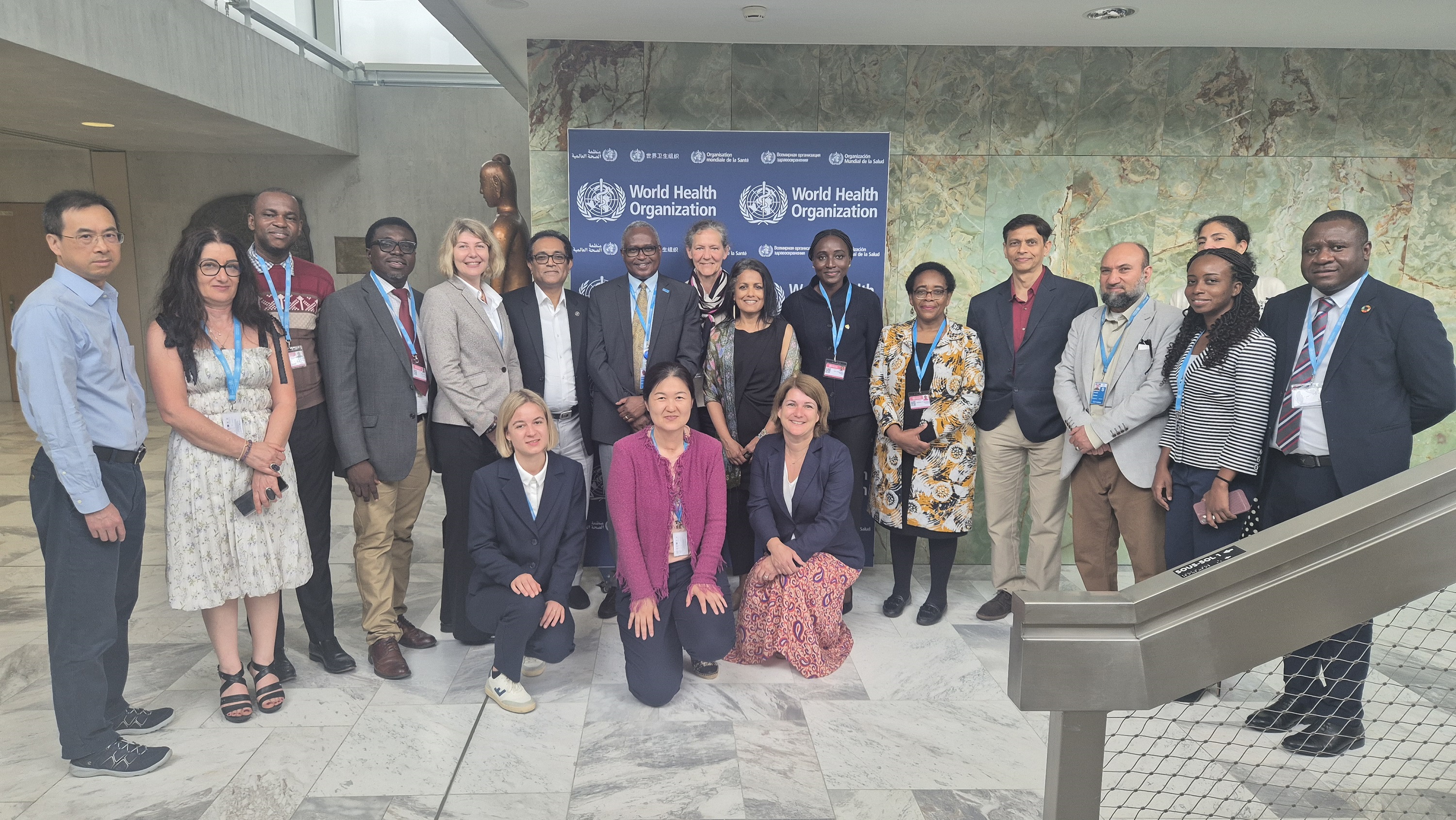
The WHO Pharmacovigilance team (PVG), in close collaboration with the Paul-Ehrlich-Institut (PEI), Germany, hosted a workshop on Risk Management Plan (RMP) Assessment at WHO headquarters, Geneva, from 3 to 4 June 2025. Assessors from four African National Regulatory Authorities representing the departments of product registration and pharmacovigilance from Ghana, Rwanda, Sierra Leone and Zimbabwe participated.
The workshop introduced the Model RMP Assessment Tools developed by WHO PVG and provided an opportunity to pilot these and receive feedback from the countries based on their practical application, with the goal of refining and finalizing the tools.
VigiMobile training in Uganda
The WHO Pharmacovigilance Team, in collaboration with the Uppsala Monitoring Centre, Sweden, facilitated a national training on the VigiFlow and VigiMobile tools on 22-23 May 2025 for over 50 vaccine safety focal points at Entebbe, Uganda. Participants included representatives from the Uganda National Regulatory Authority, Immunization Program, regional referral hospitals, and the WHO Country Office.
This training marks another significant milestone in WHO’s ongoing efforts to support low- and middle-income countries in strengthening electronic reporting of vaccine safety events. The adoption of these tools enables more efficient, accurate, and timely data capture and transmission from the field to national systems. It also ensures that critical safety data are simultaneously accessible to both national regulators and immunization programs.
Moreover, the improved speed and accuracy of data flow contribute to faster submission of safety information to the WHO global safety database, reinforcing global pharmacovigilance efforts.

WHO Pharmacovigilance Partners’ Meeting
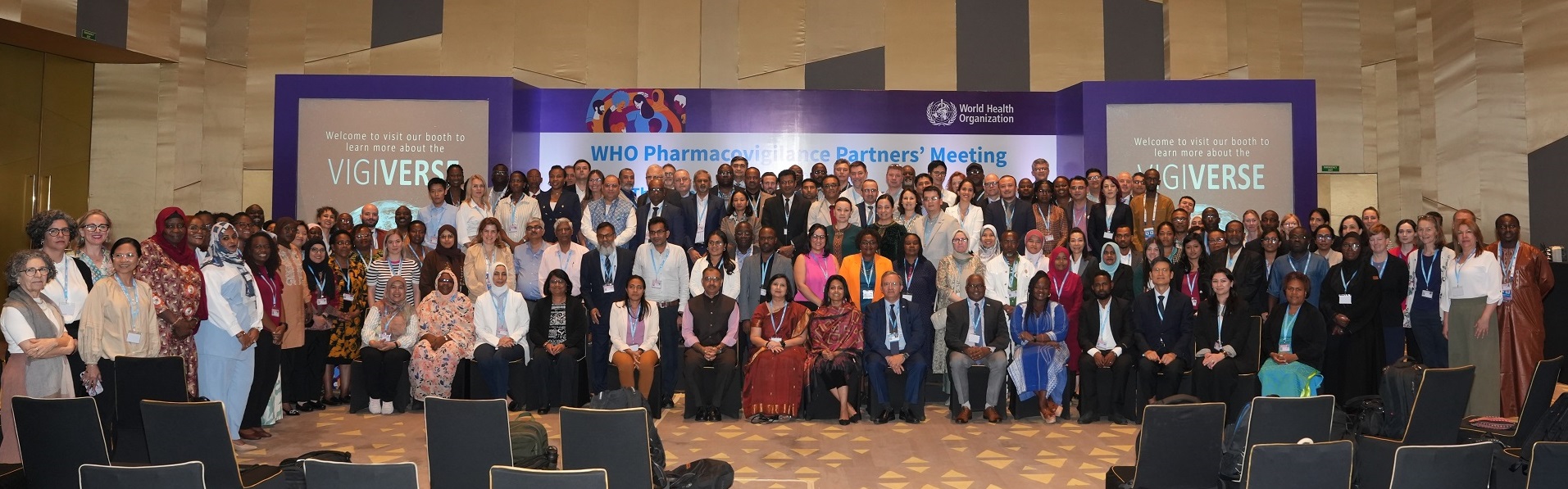
WHO Pharmacovigilance Partners’ Meeting, 13 October 2024, New Delhi, India
A WHO Pharmacovigilance Partners’ Meeting was organized on 13 October 2024 in New Delhi, India on the margins of the 19th International Conference of Drug Regulatory Authorities (ICDRA). 147 people from 68 countries participated in this face-to-face meeting, to review the WHO Global Smart Pharmacovigilance Strategy. A synopsis of the draft Strategy is available. The revised Strategy will be available in the coming months.
News
Publications
All →Estimation of background rates of adverse events of special interest in neonatal outcomes: preterm births,...
During pregnancy, women and infants are predisposed to specific infections due to various immunological and physiological changes. These infections can...
The global smart pharmacovigilance strategy
Trust in regulated medical products (medicines, vaccines and other health products) to protect health, is mostly based on a number of principles: the...
WHO pharmaceuticals newsletter - No. 2, 2025
The WHO pharmaceuticals newsletter provides you with the latest information on the safety of medicinal products and regulatory actions taken by authorities...
Protocol on estimation of thrombocytopenia background rates in children aged 5 months to <15 years in...
This is a master protocol approved by the WHO Research Ethics Review Committee on 20 May 2025. The protocol will be used by study sites that will submit...
Protocol on estimation of Guillain-Barré syndrome background rates in general population in low- and...
Background rates of possible adverse events are crucial to monitoring vaccine safety as they help separate potential safety signals following vaccination...
WHO pharmaceuticals newsletter - No. 1, 2025
The WHO pharmaceuticals newsletter provides you with the latest information on the safety of medicinal products and regulatory actions taken by authorities...
On the front page also: Protocol identifying number: ERC.0004184. Use of this protocol: As a master protocol to be approved by WHO Ethical Review Committee...
Landscape analysis of pregnancy exposure registries in low- and middle-income countries
Many vaccines and drugs hold the promise of reducing mortality and morbidity among pregnant women and infants living in low- and middle-income countries...
Guidance for clinical case management of thrombosis with thrombocytopenia syndrome (TTS) following...
Thrombotic Thrombocytopenia Syndrome (TTS) has emerged as a new adverse event following immunization in individuals vaccinated with COVID-19 non-replicant...
About us
The WHO Pharmacovigilance team strives to ensure safer use of medicines and vaccines throughout the life cycle of the products. We produce reliable, balanced information on the benefits and risks of medicines and vaccines, which enhances people’s care and safety.
Team Lead: Dr Shanthi Pal
Among our activities we are:
- Developing norms, standards and guidelines.
- Providing credible safety and regulatory information on medicines.
- Appointing and convening global advisory committees of experts to review and provide guidance on the safety of medicines and vaccines.
- Hosting global networks such as the WHO Programme for International Drug Monitoring (PIDM) to promote pharmacovigilance in countries.
- Establishing and maintaining WHO Collaborating centres (WHO CCs) to provide technical support to countries in pharmacovigilance.
- Countering vaccine-misinformation about vaccines through the Vaccine Safety Net (VSN), which facilitates the access to reliable information on vaccine safety.
- Providing training programmes to build and strengthen the capacity of national safety surveillance systems for medicines and vaccines .
- Developing innovative methods and tools to generate new evidence on the safety of medicinal products